


Quick Takes
- Stocks Higher. U.S. equity indices were higher in May as temporary breaks on tariffs and relatively strong earnings boosted sentiment. The S&P 500 jumped 6.1% and the Nasdaq 100 rose 9.0%. The Magnificent 7 rose about 13.3% in May as big technology companies reported quarterly results.
- Inflation and Interest Rates. The 10Y treasury yield rose in May to 4.4% as the U.S. House passed a budget bill that is expected to increase the deficit. Core PCE inflation for April was 2.5% while headline PCE inflation was below expectations at 2.1% mostly on lower food and energy inflation.
- Trade Negotiations. The U.S. and U.K. agreed to reduce some tariffs on cars and steel after a meeting between U.K. Prime Minister Kier Starmer and President Trump. The U.S. also reached a temporary agreement with China to pause tariffs put in place since April for 90 days and to reduce rates thereafter from the triple-digit levels touted before.
- U.S. Fiscal Policy. The House of Representatives passed a bill to extend the 2017 tax cuts, increase spending on the military and immigration enforcement, and reduce spending on Medicaid, SNAP benefits, and EV and green energy subsidies.
Asset Class Performance
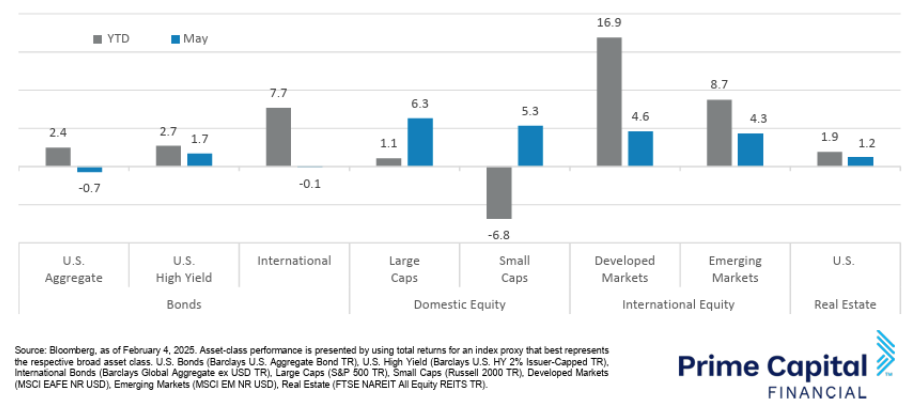
Large caps outperformed small caps in May. U.S. stocks outperformed international stocks for the first time in four months as tariff reprieves and temporary trade agreements, better consumer sentiment, and strong technology earnings boosted U.S. stocks. Stocks and real estate were generally higher in May while U.S. bonds fell.
Markets & Macroeconomics
On May 7, the Fed announced that it was maintaining its policy rate at 4.25%4.50%. Later in the month, the Trump administration reached some temporary agreements on tariffs with major U.S. trade partners including China and the U.K. The agreement with the U.K. involved the U.S. reducing its metals tariffs on aluminum and steel to 0% from 25% and reducing tariffs on imported cars from the U.K. The U.K. in return reduced some tariffs on imports from the U.S. including agricultural products and aerospace components. With China, U.S. officials agreed to a 90-day pause on tariffs that the two countries have put in place since April and a reduction in tariff rates. China agreed to reduce its tariff rate on imports from the U.S. from 125% to 10% and the Trump administration agreed to reduce U.S. tariff rates on imports from China from 145% to 30%. JP Morgan and Goldman Sachs raised GDP growth forecasts for the U.S. and China as a result of the tariff truce. Restrictions on exports of advanced semiconductors still remain in place and were even expanded in May by the Trump administration. The agreements with the U.K. and China helped consumer sentiment improve in May as Conference Board Consumer Confidence rose to 98.0 in May from 85.7 in April. Retail sales growth slowed considerably in April as consumers cut back on spending after increasing it sharply in March in anticipation of tariffs. In the labor market, the U.S. added 177K jobs in April and the unemployment rate remained steady at 4.2%. The March jobs growth number was revised down from an addition of 228K jobs to just 185K new jobs. The labor force participation rate also increased slightly from 62.5% to 62.6% in April. In the housing market, pending home sales fell by 6.3% month-over-month in April, the largest monthly decline since September of 2022 largely on tariff announcements and persistently high mortgage rates. Headline inflation, as measured by both PCE and CPI fell in April as lower oil and food prices helped ease price pressures. Headline CPI fell to 2.3% from 2.4% in March and headline PCE fell from 2.3% to 2.1%. Core CPI inflation remained steady at 2.8% in April while core PCE inflation fell from 2.6% to 2.5%.
Bottom Line: Job growth remained strong in April while consumer sentiment improved on temporary trade policy easing, but uncertainty remains in the economy around how trade policy and negotiations with trade partners will impact the economy moving forward.